
Arindam Chakraborty
Professor
Centre for Atmospheric and Oceanic Sciences, &
Divecha Centre for Climate Change (Associated)
Indian Institue of Science
Bengaluru, KA, India.
Email: arch -at- iisc.ac.in
Phone: +91-80-2293-3074
Google Scholar Profile
ResearchGate Profile
ORCID Profile
Research Interests: Theory of Monsoons, Onset, Tropical Climate and Teleconnection, El Nino-Southern Oscillation, Extreme Events, Land-Atmosphere Interaction, Climate Models, Seasonal Prediction, AI/ML in Climate.
Research Highlights
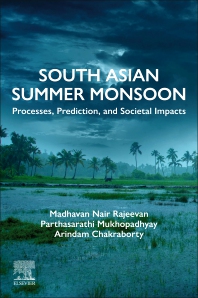
Book on South Asian Summer Monsoon
A new book on the South Asian Summer Monsoon details our current understanding of its theory, variability from synoptic to decadal scales, forecasting aspects, and vision to future research. We hope that this book will be useful to students, researchers, forecasters, and application builders whos work relates to monsoons of the south Asian region.
Recent Shift of Phase of Diurnal Cycle of Indian Summer Monsoon Rainfall
Weather and climate variations are most noticeable on the diurnal timescale, either in sync with or offset from the solar radiation reaching the top of the atmosphere. These variations in the energy budget, especially related to moist convection, interact with the broader climate system. Using hourly station data from across India, we demonstrate that the timing of the rainfall diurnal cycle during the summer monsoon season has shifted consistently across different regions in recent decades (1992–2014) compared to earlier periods (1969–1991). While much of central, northern, and southern peninsular India, which represents about 55% of the stations, has seen a delay in the rainfall phase, smaller regions like northeast and northwest India have experienced an earlier phase.
See here for details.
Reference: Chutia et al. (2025).
Reference: Chutia et al. (2025).
Possible Mechanisms behind Dominant Modes of Seasonal Cycle of Rainfall over India
Observations indicate that rainfall during the onset phase of the monsoon (June) is not correlated with rainfall in the post-onset phase (July-September). For the first time, this study establishes a connection between inter-annual and monthly variations in rainfall without assuming any of the intra-seasonal features typically observed during the monsoon, such as onset, intra-seasonal oscillations, synoptic variabilities, and extremes. Inter-annual variations lead to perturbations to the mean seasonal cycle, which in turn results in monthly variations of rainfall on top of the mean seasonal cycle. This study aims to understand the governing mechanisms behind these monthly variations of rainfall every year. The analyses reveal that June rainfall, which is related to the rapid or slow progress of the monsoon onset, is primarily influenced by the normal or slow phase transition of the Madden-Julian Oscillation, along with prevailing background conditions of precipitable water. Conversely, the rainfall for the remainder of the season is mainly governed by the phase of the El Niño Southern Oscillation through anomalous moisture flux convergence.
See here for details.
Reference: Bhattacharyya and Chakraborty(2025).
Reference: Bhattacharyya and Chakraborty(2025).
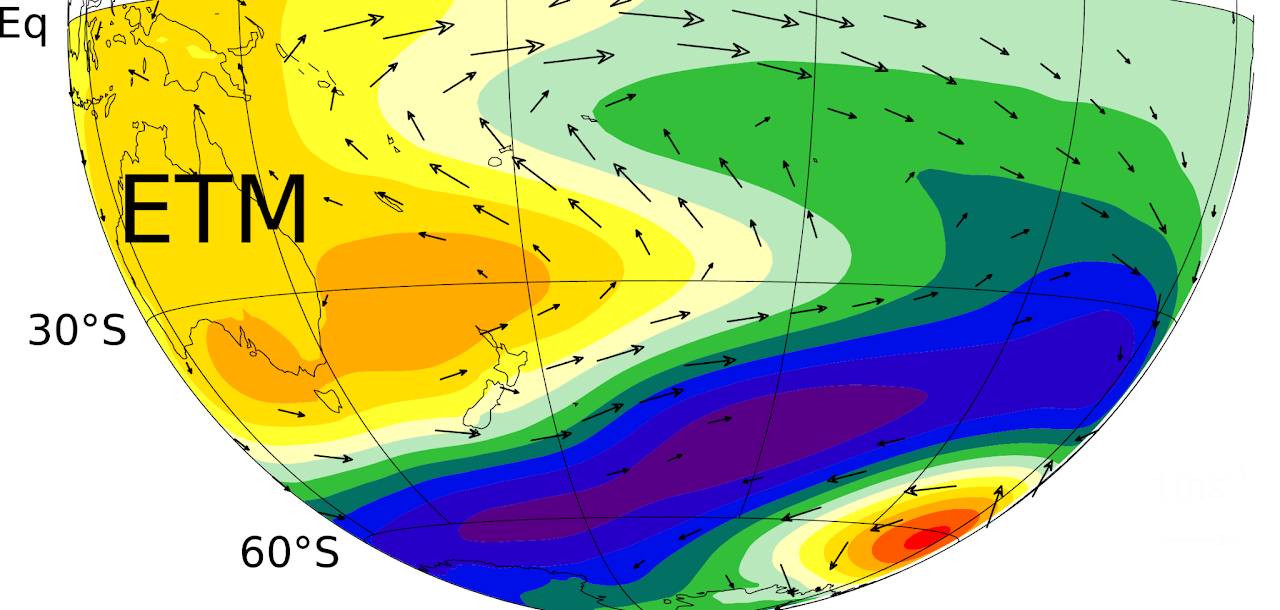
ENSO Transition Mode (ETM)
The ENSO transition mode (ETM) is a climate mode of the southern hemisphere Indo-Pacific Ocean domain, especially prominent during boreal spring. The positive phase of this mode is characterized by a zonal dipole of surface pressure over the southern Pacific Ocean with an increase in pressure toward the east. It creates a surface wind pattern that helps increase the eastern equatorial Pacific sea surface temperature (SST0 from boreal winter to summer. In other words, a positive phase of ETM helps develop a positive phase of ENSO (El Nino) or helps weaken a negative phase of ENSO (La Nina). ETM forcing is most effective in modulating such transition at the multidecadal time scales (~50 years). See here for details.
Reference: Srivastava et al. (2024) , Srivastava et al. (2025).
Reference: Srivastava et al. (2024) , Srivastava et al. (2025).
Indian and Sahelian Summer Monsoon: Coherence and Mechanism
The Indian and Sahelian summer monsoons are critical components of the global monsoon system, shaping climate variability and livelihoods across Asia and Africa. While both are linked to the Intertropical Convergence Zone, they retain strong regional identities and exhibit pronounced interannual variability. In this work, we explore how these two monsoon systems coevolve and interact using long-term rainfall observations. Using long term running correlation we highlight a strengthening connection between the Indian and Sahelian monsoons in recent decades and examine the physical mechanisms—spanning intraseasonal dynamics, large-scale circulation, and moisture variability—that underpin this emerging linkage, with implications for improved monsoon prediction.
See here for details.
Reference: Bordoloi et al. (2025) .
Reference: Bordoloi et al. (2025) .
Journal Publications
- Srivastava, Shikhar, Arindam Chakraborty, and Raghu Murtugudde, 2026: Unravelling the Teleconnections: Southern Hemisphere ENSO Transition Mode and the Global Boreal Summer Monsoons, Journal of Climate, 39, 861-874, doi: https://doi.org/10.1175/JCLI-D-25-0611.1
- Bordoloi, Abhishek, Arindam Chakraborty, and R.S. Nanjundiah 2025: Enhanced Covariability of Indian and Sahelian Summer Monsoons in Recent Decades, Environmental Research Communications, doi: https://doi.org/10.1088/2515-7620/ae25c4
- Bhattacharyya, S, Arindam Chakraborty, and R.S. Nanjundiah 2025: Indian Summer Monsoon: Predictions and Applications, Journal of the Indian Institute of Science, doi: https://doi.org/10.1007/s41745-025-00491-7
- Chutia, T., Arindam Chakraborty, G.S. Bhat, and M.N. Rajeevan, 2025: Shifted Diurnal Cycle of Indian Summer Monsoon Rainfall, Geophysical Research Letters , 52(18), p.e2025GL116401. doi: https://doi.org/10.1029/2025GL116401
- Srivastava, Shikhar, Arindam Chakraborty, and Raghu Murtugudde, 2025: Evaluation of a Southern Hemispheric ENSO Transition Mode in CMIP6 Models: Insights and Implications, Journal of Geophysical Research (Atmosphere), 130 (e2024JD042967) doi: https://doi.org/10.1029/2024JD042967
- Bhattacharyya, S, and Arindam Chakraborty, 2025: Possible Mechanisms behind Dominant Modes of Seasonal Cycle of Rainfall over India, Journal of Climate, 38 (5), 1271-1288, doi: https://doi.org/10.1175/JCLI-D-24-0300.1
- Singhai, P., Arindam Chakraborty, K Jana, K Rajendran, S Surendran, K Pegion, 2024:The curious case of a strong relationship between ENSO and Indian summer monsoon in CFSv2 model, Dynamics of Atmospheres and Oceans, doi: https://doi.org/10.1016/j.dynatmoce.2024.101504
- Srivastava, Shikhar, Arindam Chakraborty, and Raghu Murtugudde, 2024: Decadal preference of seasonal ENSO transition through a southern hemisphere climate mode, Environmental Research Letters, 19 (6) doi: 10.1088/1748-9326/ad4bf7
- Samuel, J.B., and A. Chakraborty, 2023: Integration of a Groundwater Model to the Noah Land Surface Model for Aquifer-Soil Interaction, Journal of Advances in Modeling Earth Systems, doi: https://doi.org/10.1029/2022MS003153
- Singhai, P, A. Chakraborty, K Rajendran, and S Surendran, 2023: Why is the Indian summer monsoon in CFSv2 hypersensitive to moisture exchange with the Pacific Ocean?, Climate Dynamics, doi: https://doi.org/10.1007/s00382-023-06815-6
- Samuel, J.B., A. Chakraborty, and A. Paleri, 2023: Deciphering the relationship between vegetation and Indian summer monsoon rainfall, Environmental Research letters, 18, 044023, doi: https://doi.org/10.1088/1748-9326/acc263
- Nikumbh, A.C., ABS. Thakur, A. Chakraborty, G.S. Bhat, and J. Sukhatme, 2023: The role of North Atlantic blocking high during large-scale heavy rainfall events over central India, Journal of the Atmospheric Sciences, doi: https://doi.org/10.1175/JAS-D-22-0185.1
- Chakraborty, A., JB Samuel, and A. Paleri, 2023: Role of land-surface vegetation in the march of Indian monsoon onset isochrones in a coupled models, Quarterly Journal of the Royal Meteorological Society, 149, 115-132, doi: https://doi.org/10.1002/qj.4398
- Vishnu, S., Arindam Chakraborty, and J. Srinivasan, 2022: Why the Droughts of the Indian Summer Monsoon are more Severe than the Floods, Climate Dynamics, doi: https://doi.org/10.1007/s00382-021-06111-1
- Jalihal, Chetankumar, J. Srinivasan, Arindam Chakraborty, 2022: Response of the low-level jet to precession and its implications for proxies of the Indian monsoon, Geophysical Research Letters, doi: https://doi.org/10.1029/2021GL094760
- Chakraborty, Arindam and Priyanshi Singhai, 2021: Asymmetric response of the Indian summer monsoon to positive and negative phases of major tropical climate patterns, Scientific Reports, doi: https://doi.org/10.1038/s41598-021-01758-6
- Nikumbh, A. C., Arindam Chakraborty, G. S. Bhat, and D.M.W. Frierson, 2021: Multiscale interactions between monsoon intra-seasonal oscillations and low pressure systems that produce heavy rainfall events of different spatial extents, Journal of Climate, doi: https://doi.org/10.1175/JCLI-D-21-0231.1
- Rohit Chakraborty, Arindam Chakraborty, Ghouse Basha, Venkat Ratnam Madineni, 2021: Lightning occurrences and intensity over the Indian region: long-term trends and future projections, Atmospheric Chemistry and Physics, 07/2021; 21: 11161-11177.
- Rajendran, K., Surendran, S., Varghese, S.J. and Arindam Chakraborty, 2021: Do seasonal forecasts of Indian summer monsoon rainfall show better skill with February initial conditions?, Current Science, 120 (12) 1863-1874
- Arushi, PV, Arindam Chakraborty, and RS Nanjundiah 2020: Recent Weakening in MJO Related Convective Activity over the Equatorial Indian Ocean and Maritime Continent, Theoretical and Applied Climatology, doi: 10.1007/s00704-020-03423-w.
- Nikumbh, A. C., Arindam Chakraborty, G. S. Bhat, and D.M.W. Frierson, 2020: Large-scale extreme rainfall-producing synoptic systems of the Indian summer monsoon., Geophysical Research Letters, doi:https://doi.org/10.1029/2020GL088403
- Jalihal, C., J. Srinivasan, and Arindam Chakraborty, 2020: Different precipitation response over land and ocean to orbital and greenhouse gas forcing, Scientific Reports (Nature), doi:https://doi.org/10.1038/s41598-020-68346-y
- Agrawal, S., and Arindam Chakraborty, 2020: Evaluation of ESACCI satellite soil moisture product using in-situ observations over India, Journal of Earth System Science, doi: https://doi.org/10.1007/s12040-020-01384-2
- Srivastava, G., Arindam Chakraborty, Ravi S. Nanjundiah, 2020: Multidecadal variations in ENSO-Indian summer monsoon relationship at sub-seasonal timescales, Theoretical and Applied Climatology, doi:10.1007/s00704-020-03122-6
- Singhai, P., Shibin Balakrishnan, E. N. Rajagopal, Arindam Chakraborty, 2020: Phase inconsistency as a major source of error in NGFS forecast, Climate Dynamics, doi:10.1007/s00382-020-05148-y
- Karmakar, N, Arindam Chakraborty, Ravi S. Nanjundiah, 2020: Influence of global sea surface temperature on ultra‐low frequency variability in the Indian summer monsoon rainfall, Quarterly Journal of the Royal Meteorological Society, doi:10.1002/qj.3715
- Chakraborty, Arindam, 2019: Zonally symmetric vs asymmetric North Pacific Ocean sea surface temperature influence on Indian summer monsoon through modulation of upper tropospheric circulation, Mausam, 70, 4 (October 2019), 753-766 [PDF]
- Jalihal, C., J. Srinivasan, and Arindam Chakraborty, 2019: Modulation of Indian monsoon by water vapor and cloud feedback over the past 22,000 years, Nature Communinications, 10, 5701 (2019) doi:10.1038/s41467-019-13754-6
- Jana, K, D Sengupta, S Kundu, Arindam Chakraborty and P Shaw, 2019: The Statistical Face of a Region Under Monsoon Rainfall in Eastern India, Journal of the American Statistical Association, doi: 10.1080/01621459.2019.1681275
- Nikumbh, A.C., Arindam Chakraborty, and G.S. Bhat, 2019: Recent spatial aggregation tendency of rainfall extremes over India, Scientific Reports, 9, 10321, doi:10.1038/s41598-019-46719-2
- Jalihal, C., JHC Bosmans, J Srinivasan, and Arindam Chakraborty, 2019: The response of tropical precipitation to Earth's precession: the role of energy fluxes and vertical stability, Climate of the Past, 15, 449–462, https://doi.org/10.5194/cp-15-449-2019
- Agrawal, S., Arindam Chakraborty, N. Karmakar, Simon Moulds, Ana Mijic and Wouter Buytaert, 2019: Effects of winter and summer-time irrigation over Gangetic Plain on the mean and intra-seasonal variability of Indian summer monsoon, Climate Dynamics, 53: 3147. https://doi.org/10.1007/s00382-019-04691-7
- Das, S., D. Sengupta, and Arindam Chakraborty, 2019: The Madden‐Julian oscillation in an aquaplanet‐like general circulation model with and without continents. Journal of Advances in Modeling Earth Systems, 11, 1459–1476. https://doi.org/10.1029/2018MS001455
- Srivastava, G, Arindam Chakraborty, and R.S. Nanjundiah, 2019: Multidecadal see-saw of the impact of ENSO on Indian and West African summer monsoon rainfall. Climate Dynamics 52.11, 6633-6649. [Bibtex Citation]
- Shawki, D, A. Voulgarakis, Arindam Chakraborty, M. Kasoar, and J. Srinivasan, 2018: The South Asian Monsoon Response to Remote Aerosols: Global and Regional Mechanisms. Journal of Geophysical Research (Atmospheres), doi:10.1029/2018jd028623.
- Chakraborty, Arindam, 2018: Preceding winter La Niña reduces Indian summer monsoon rainfall. Environmental Research Letters, 13, 054030, doi:10.1088/1748-9326/aabdd5.
- Jain, D., Arindam Chakraborty, and R.S. Nanjundaiah, 2018: A Mechanism for the Southward Propagation of Mesoscale Convective Systems Over the Bay of Bengal. Journal of Geophysical Research (Atmospheres), 123, 3893-3913, doi:10.1002/2017JD027470.
- Ghosh, R., Arindam Chakraborty, and R.S. Nanjundiah, 2018: Relative role of pre-monsoon conditions and intraseasonal oscillations in determining early-vs-late Indian monsoon intensity in a GCM. Theoretical and Applied Climatology, 131, 319–333, doi:10.1007/s00704-016-1970-z.
- Karmakar, N., Arindam Chakraborty, and R.S. Nanjundiah, 2017: Increased sporadic extremes decrease the intraseasonal variability in the Indian summer monsoon rainfall. Scientific Reports, 7, 7824, doi:10.1038/s41598-017-07529-6.
- Chakraborty, Arindam, and S. Agrawal, 2017:Role of west Asian surface pressure in summer monsoon onset over central India. Environmental Research Letters, 12, 074002.
- Arushi PV, Arindam Chakraborty, and R.S. Nanjundiah, 2017: Orographic control of the Bay of Bengal cold pool rainfall. Journal of Earth System Science, 126, 111, doi:10.1007/s12040-017-0892-1.
- Bhattacharya, A, Arindam Chakraborty, and V. Venugopal, 2017: Role of aerosols in modulating cloud properties during active-break cycle of Indian summer monsoon. Climate Dynamics, 49(5-6), 2131-2145.
- Karmakar, N., Arindam Chakraborty, and R.S. Nanjundiah, 2017: Space-Time Evolution of the Low- and High-Frequency Intraseasonal Modes of the Indian Summer Monsoon. Monthly Weather Review, doi:10.1175/MWR-D-16-0075.1. [PDF]
- Agrawal, S., and Arindam Chakraborty, 2016: Role of surface hydrology in determining the seasonal cycle of Indian summer monsoon in a general circulation model. Hydrology Earth Syst Sci Discuss, 1-33, doi:10.5194/hess-2016-591 [PDF]
- Chakraborty, Arindam, 2016: A synoptic scale perspective of heavy rainfall over Chennai in November 2015, Current Science, 111 (1), 201-207. [PDF]
- Das S, D Sengupta, Arindam Chakraborty, J Sukhatme, R Murtugudde, 2016: Low-frequency intraseasonal variability in a zonally symmetric aquaplanet model. Meteorology and Atmospheric Physics. 2016 Dec 1;128(6):697-713.
- Karmakar, N., Arindam Chakraborty, Ravi S Nanjundiah, 2015: Decreasing intensity of monsoon low frequency intraseasonal variability over India, Environmental Research Letters, 10, doi:10.1088/1748-9326/10/5/054018.
- Chakraborty, Arindam., Ravi S. Nanjundiah, and J. Srinivasan, 2014: Local and remote impacts of direct aerosol forcing on Asian monsoon, International Journal of Climatology, doi: 10.1002/joc.3826. [PDF]
- Bhattacharya, A., Arindam Chakraborty and V Venugopal, 2014: Variability of cloud liquid water and ice over South Asia from TMI estimates, Climate Dynamics, doi 10.1007/s00382-013-1978-3. [PDF]
- Chakraborty, Arindam, and Ravi S Nanjundiah, 2014: Role of Orography in Modulating Space-time Scales of Convection over South Asia, Theoretical and Applied Climatology, doi: 10.1007/s00704-013-0963-4. [PDF]
- Jain, D. K., Arindam Chakraborty, and R S Nanjundiah, 2013: Role of the cloud adjustment time scale in simulation of the interannual variability of Indian summer monsoon, Meteorology and Atmospheric Physics, 122:159-173. [PDF]
- Ramasesha, S and Arindam Chakraborty, 2013: Power generation using wind energy in northwest Karnataka, India, Current Science, 104, 757-761. [PDF]
- Chakraborty, A and R S Nanjundiah, 2012: Space-time Scales of Northward Propagation of Convection During Boreal Summer, Monthly Weather Review, 140, 3857-3866. [PDF]
- Krishnamurti, T. N., Anu Simon, Aype Thomas, Akhilesh Mishra, Dev Sikka, Dev Niyogi, Arindam Chakraborty, Li Li, 2012: Modeling of Forecast Sensitivity on the March of Monsoon Isochrones from Kerala to New Delhi, The First 25 Days, J. Atmospheric Science, 69, 2465-2487. [PDF]
- Meehl, Gerald A., Julie M. Arblaster, Julie M. Caron, H. Annamalai, Markus Jochum, Arindam Chakraborty, Raghu Murtugudde, 2012: Monsoon Regimes and Processes in CCSM4. Part I: The Asian–Australian Monsoon. J. Climate, 25, 2583–2608. [PDF]
- Jain, D. K., Arindam Chakraborty, and R S Nanjundiah, 2012: On the role of cloud adjustment time scale in simulating precipitation with Relaxed Arakawa–Schubert convection scheme, Meteorology and Atmospheric Physics, 115, 1-13. [PDF]
- Chakraborty, A., 2010: The Skill of ECMWF Medium Range Forecasts During the Year of Tropical Convection 2008, Monthly Weather Review, 138, 3787-3805. [PDF]
- Krishnamurti, T. N., Arindam Chakraborty, and A. K. Mishra, 2010: Improving multimodel forecasts of the vertical distribution of heating using the TRMM profiles, J. Climate, 23, 1089-1094. [PDF]
- Krishnamurti, T. N., R. Krishnamurti, A. D. Sagadevan, Arindam Chakraborty, W. K. Dewar, C. A. Clayson, and J. F. Tull, 2009: Space-time stuctures of earthquakes, Meteorology and Atmospheric Physics, 105, 69-83. [PDF]
- Chakraborty, A., and T. N. Krishnamurti, 2009: Improving global model precipitation forecasts over India from downscaling and FSU superensemble. Part II: Seasonal climate, Monthly Weather Review, 137, 2736-2757. [PDF]
- Krishnamurti, T. N., A. K. Mishra, Arindam Chakraborty, and M. Rajeevan, 2009: Improving Global Model Precipitation Forecasts over India Using Downscaling and the FSU Superensemble. Part I: 1–5-Day Forecasts, Monthly Weather Review, 137, 2713-2735. [PDF]
- Krishnamurti, T. N., A. D. Sagadevan, Arindam Chakraborty, A. K. Mishra, A. Simon, and S-H Chen, 2009: Improving Multimodel Forecast of Monsoon Weather over China using FSU Superensemble, Advances in Atmospheric Sciencese, 26, 813-839. [PDF]
- Krishnamurti, T. N., Arindam Chakraborty, Andrew Martin, William K Lau, Kyu-Myong Kim, Yogesh Sud and Gregory Walker, 2009: Impact of Arabian Sea Pollution on the Bay of Bengal Winter Monsoon Rains, Journal of Geophysical Research: Atmosphere, 114, D06213, doi:10.1029/2008JD010679. [PDF]
- Chakraborty, A., Ravi S. Nanjundiah, and J. Srinivasan, 2009: Impact of African Orography and Indian Summer Monsoon on the Low-Level Somali Jet, International Journal of Climatology, 29, 983-992. [PDF]
- Chakraborty, A., and T. N. Krishnamurti, 2008: Improved forecasts of diurnal cycle in tropics using multiple global models. Part II: Asian Summer Monsoon, Journal of Climate, 21, 4045–4067. [PDF]
- Krishnamurti, T. N., C. Gnanaseelan, A. K. Mishra and Arindam Chakraborty, 2008: Improved Forecasts of Diurnal Cycle in Tropics Using Multiple Global Models. Part I: Precipitation, Journal of Climate, 21, 4029–4043. [PDF] [Bibtex Citation]
- Krishnamurti, T. N., Arindam Chakraborty, R. Krishnamurti, W. K. Dewar, and C. Clayson, 2007: Passage of intraseasonal waves in the subsurface oceans, Geophysical Research Letters, 34, doi: 10.1029/2007GL030496. [PDF] [Bibtex Citation]
- Chakraborty, A., T. N. Krishnamurti and C. Gnanaseelan, 2007: Prediction of the Diurnal Cycle using a Multimodel Superensemble. Part II: Clouds, Monthly Weather Review, 135, 4097-4116. [PDF] [Bibtex Citation]
- Krishnamurti, T. N., C. Gnanaseelan, and Arindam Chakraborty, 2007: Prediction of the Diurnal Cycle using a Multimodel Superensemble. Part I: Precipitation, Monthly Weather Review, 135, 3613-3632. [PDF] [Bibtex Citation]
- Ross, R. S., Arindam Chakraborty, Anthony Chen, L. Stefanova, S. Sirdas and T. N. Krishnamurti, 2007: Improved Seasonal Climate Forecasts for the Caribbean Region using a Multi-Model Superensemble, Meteorology and Atmospheric Physics, doi: 10.1007/s00703-006-0234-3. [PDF] [Bibtex Citation]
- Sirdas, S., Robert S. Ross, T. N. Krishnamurti and Arindam Chakraborty, 2007: Evaluation of the FSU Synthetic Superensemble Performance for Seasonal Forecasts over the Euro-Mediterranean Region, Tellus-A, 59, 50-70. [PDF] [Bibtex Citation]
- Chakraborty, A., R. S. Nanjundiah, and J. Srinivasan, 2006: Theoretical aspects of the onset of Indian summer monsoon from perturbed orography simulations in a GCM, Annales Geophysicae, 24, 2075-2089. [PDF] [Bibtex Citation]
- Krishnamurti, T. N., Arindam Chakraborty, R. Krishnamurti, W. K. Dewar, C. A. Clayson, 2006: Seasonal Prediction of Sea Surface Temperature Anomalies Using a Suite of 13 Coupled Atmosphere-Ocean Models, Journal of Climate, 19, 6069-6088 [PDF] [Bibtex Citation]
- Chakraborty, A., T. N. Krishnamurti, 2006: Improved Seasonal Climate Forecasts of the South Asian Summer Monsoon Using a Suite of 13 Coupled Ocean-Atmosphere Models, Monthly Weather Review, 134, 1697-1721. [PDF] [Bibtex Citation]
- Chakraborty, A., S. K. Satheesh, R. S. Nanjundiah, and J. Srinivasan, 2004: Impact of absorbing aerosols on the simulation of climate in the Indian region in an atmospheric general circulation model.Annales Geophysicae., 22, 1421-1434. [PDF] [Bibtex Citation]
- Chakraborty, A., and J. Srinivasan, 2003: Comparison of radiative fluxes at the top of the atmosphere from INSAT and ERBE, Mausam, 54, 299-314. [PDF] [Bibtex Citation]
- Chakraborty, A., R. S. Nanjundiah, and J. Srinivasan, 2002: Role of Asian and African orography in Indian summer monsoon., Geophysical Research Letters, 29, 10.1029/2002GL015522. [PDF] [Bibtex Citation]
- Bhat, G. S., Arindam Chakraborty, R. S. Nanjundiah and J. Srinivasan, 2002: Vertical thermal structure of the atmosphere during active and weak phases of convection over the north Bay of Bengal: Observation and model results, Current Science, 83, 296-302. [PDF] [Bibtex Citation]
2025
2024
2023
2022
2021
2020
2019
2018
2017
2016
2015
2014
2013
2012
2010
2009
2008
2007
2006
Before 2006
Books/Chapters and Popular Articles
- Rajeevan, M. N., Mukhopadhyay, P., and Arindam Chakraborty, 2025: South Asian Summer Monsoon: Processes, Prediction, and Societal Impacts, Elsevier, Paperback ISBN 9780443239458, eBook ISBN 9780443239441, pp 300, 1st Edition.
- Arindam Chakraborty and J Srinivasan, 2019: Indian Summer Monsoon, Research News, Current Science, 117
- Deepeshkumar Jain, Arindam Chakraborty and Ravi S. Nanjundiah, 2019: Convective Available Potential Energy and Precipitation in a Cloud-Resolving Model Simulation of Indian Summer Monsoon, in Current Trends in the Representation of Physical Processes in Weather and Climate Models, Eds: David Randall, J Srinivasan, RS Nanjundiah, P Mukhopadhyay, Springer Atmospheric Sciences, 113-138.
- Arindam Chakraborty, 2016: The Inscrutable monsoon? Current Science, 111 (8), 1305-1306.
Opportunity
Students are admitted through normal procedure of IISc. Visit https://www.iisc.ac.in/admissions/ for details.
If you are looking for a PostDoc position, IISc has advertised for CV Raman Postdoc Fellowship. Details are here.
If you are looking for an intership, you may want to apply through the Indian Academy of Sciences Summer Fellowship Program.