Shifted Diurnal Cycle of Indian Summer Monsoon Rainfall
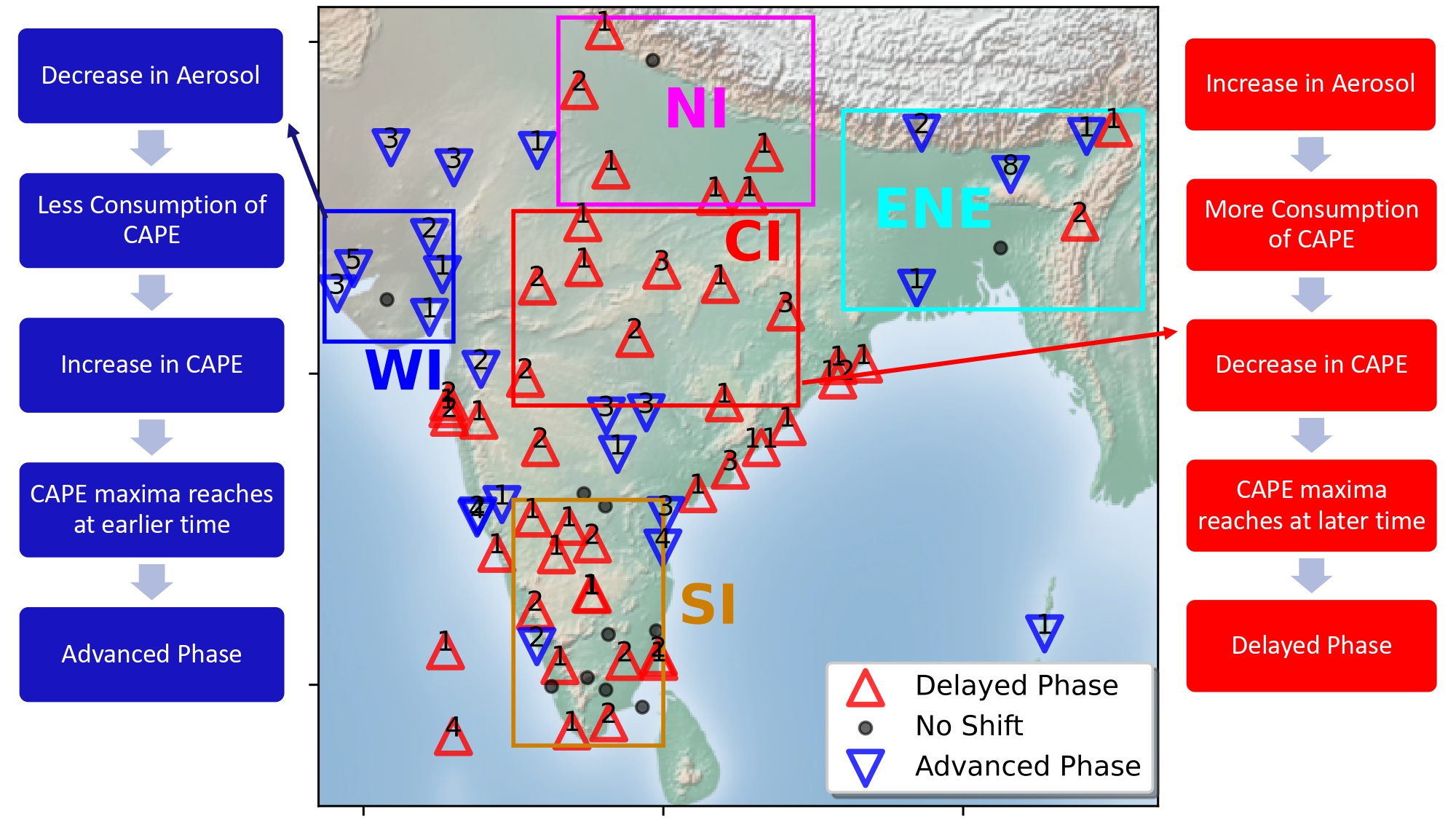
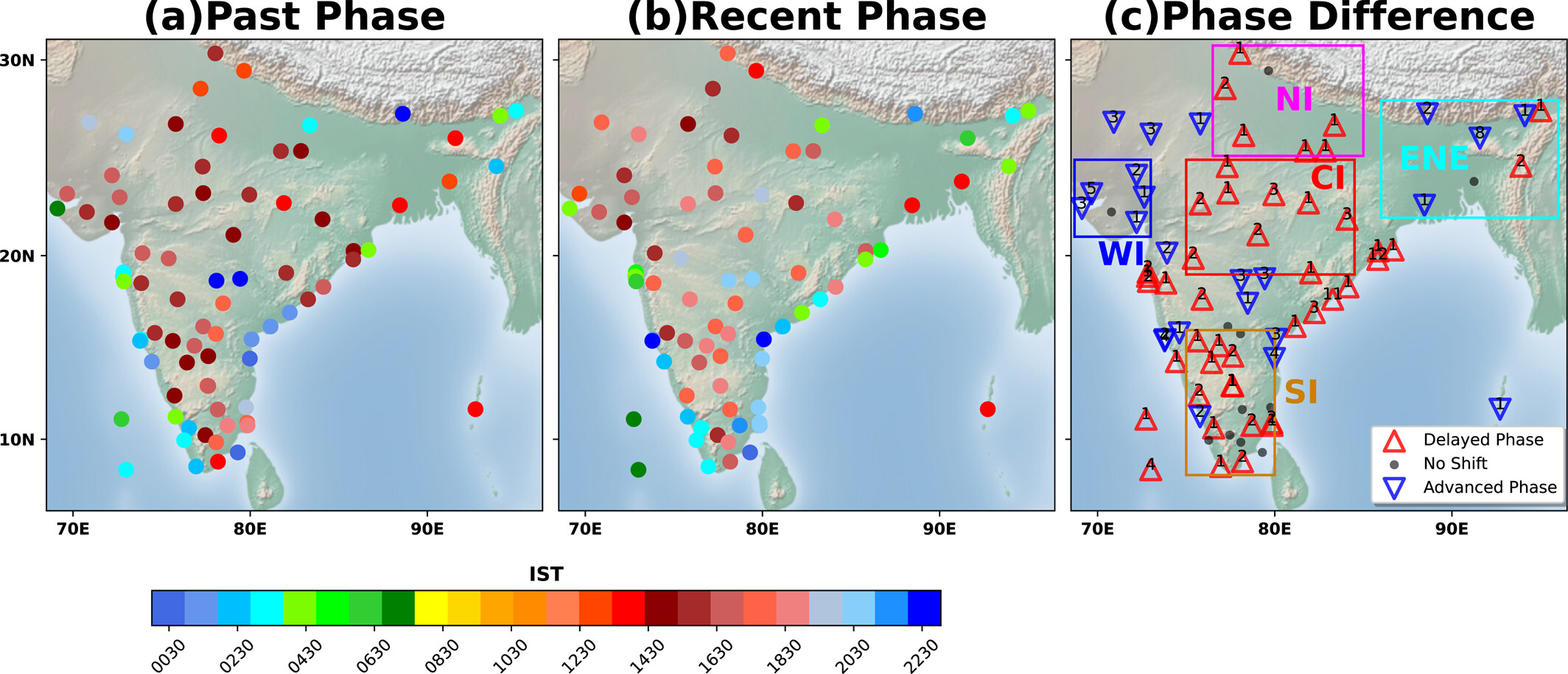
Weather and climate variations are most noticeable on the diurnal timescale, either in sync with or offset from the solar radiation reaching the top of the atmosphere. These variations in the energy budget, especially related to moist convection, interact with the broader climate system. Using hourly station data from across India, we demonstrate that the timing of the rainfall diurnal cycle during the summer monsoon season has shifted consistently across different regions in recent decades (1992–2014) compared to earlier periods (1969–1991). While much of central, northern, and southern peninsular India, which represents about 55% of the stations, has seen a delay in the rainfall phase, smaller regions like northeast and northwest India have experienced an earlier phase.
Robustness of Phase Shift
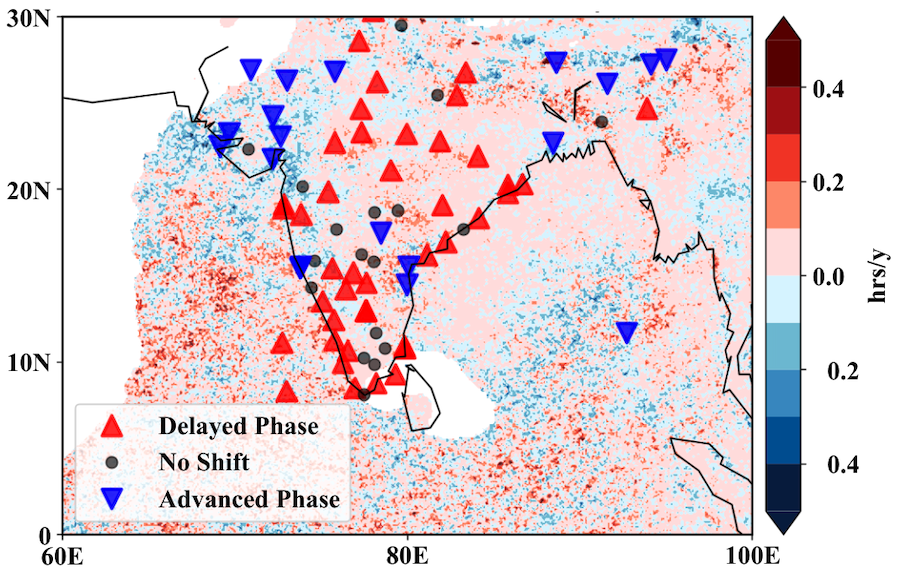
The trend of the phase of diurnal cycle of rainfall calculated from Integrated Multi-satellitE Retrievals for GMP (IMERG) half-hourly rainfall data for the period 1998-2023 over the Indian domain clearly shows that the phase shift from station data (red and blue triangles) matches with the nature of trend found from IMERG data. Thus, change of phase of diurnal cycle of rainfall over these stations is robust.
Phase Modulation by Extremes
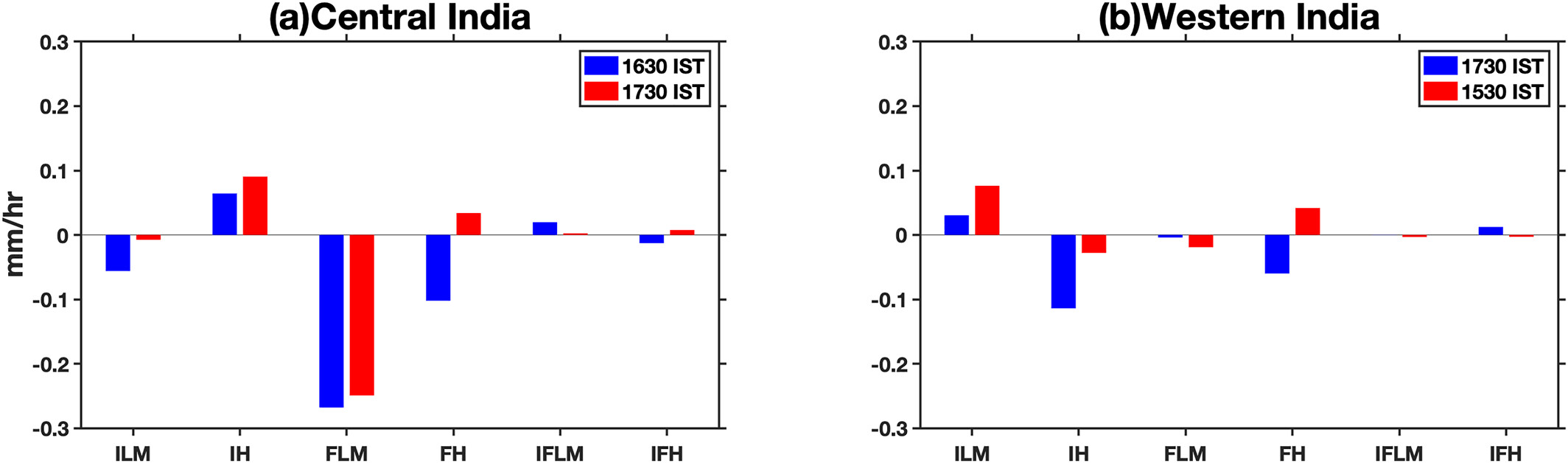
Enhanced frequency (intensity) of heavy rainfall events later (earlier) in the afternoon is responsible for the delay (advance) in the mean diurnal phase over central (western) India.
Phase Modulation by Active and Break Days
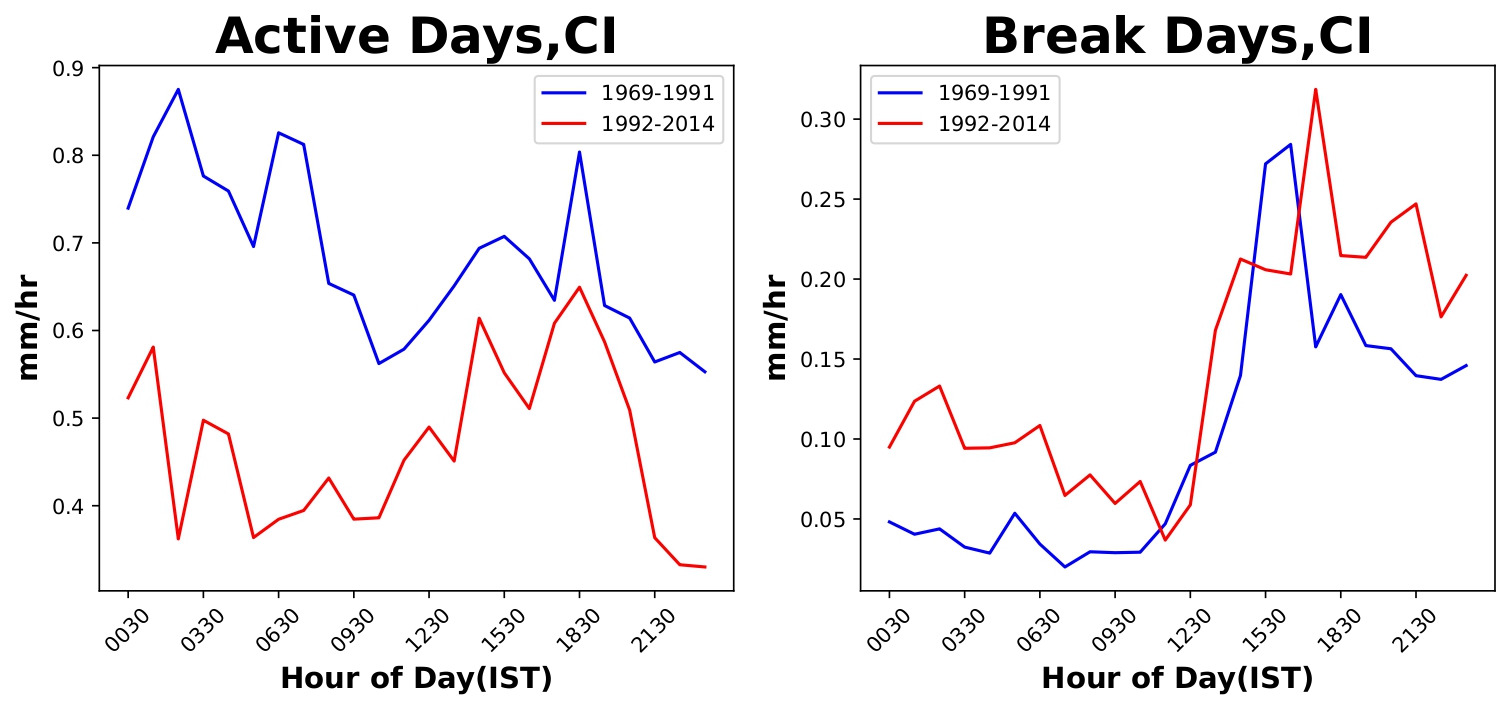
No change of phase for active days but for the break days, the phase has been shifted to a later time of the day. Moreover, increase in the number of break days is found in recent epoch over Central India. Thus, increase in break days over Central India is another cause for delayed phase over this region.