India-Sahel Teleconnection
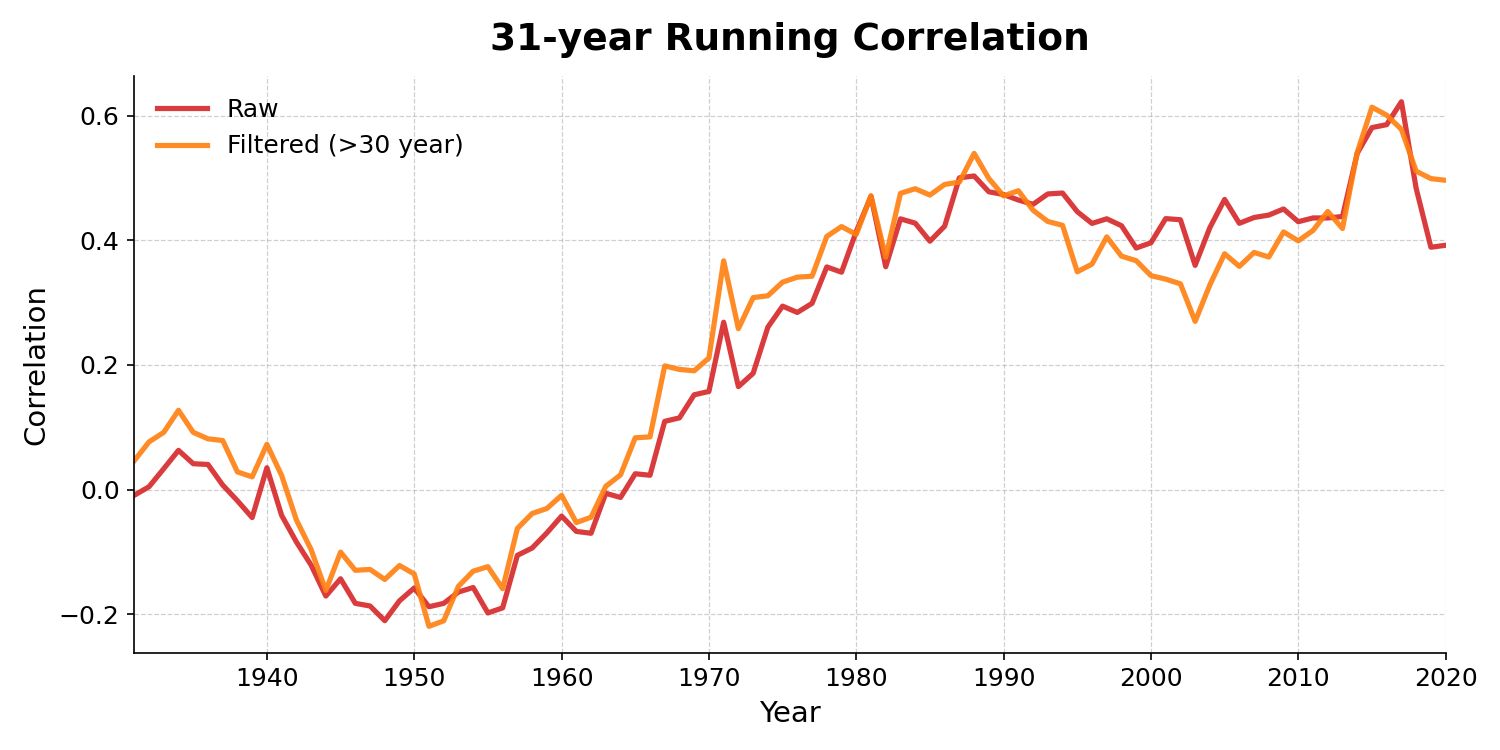
The Indian and Sahelian summer monsoons are critical components of the global monsoon system, shaping climate variability and livelihoods across Asia and Africa. While both are linked to the Intertropical Convergence Zone, they retain strong regional identities and exhibit pronounced interannual variability. In this work, we explore how these two monsoon systems coevolve and interact using long-term rainfall observations. Using long term running correlation we highlight a strengthening connection between the Indian and Sahelian monsoons in recent decades and examine the physical mechanisms—spanning intraseasonal dynamics, large-scale circulation, and moisture variability—that underpin this emerging linkage, with implications for improved monsoon prediction.
Role of African Easterly Jet (AEJ)
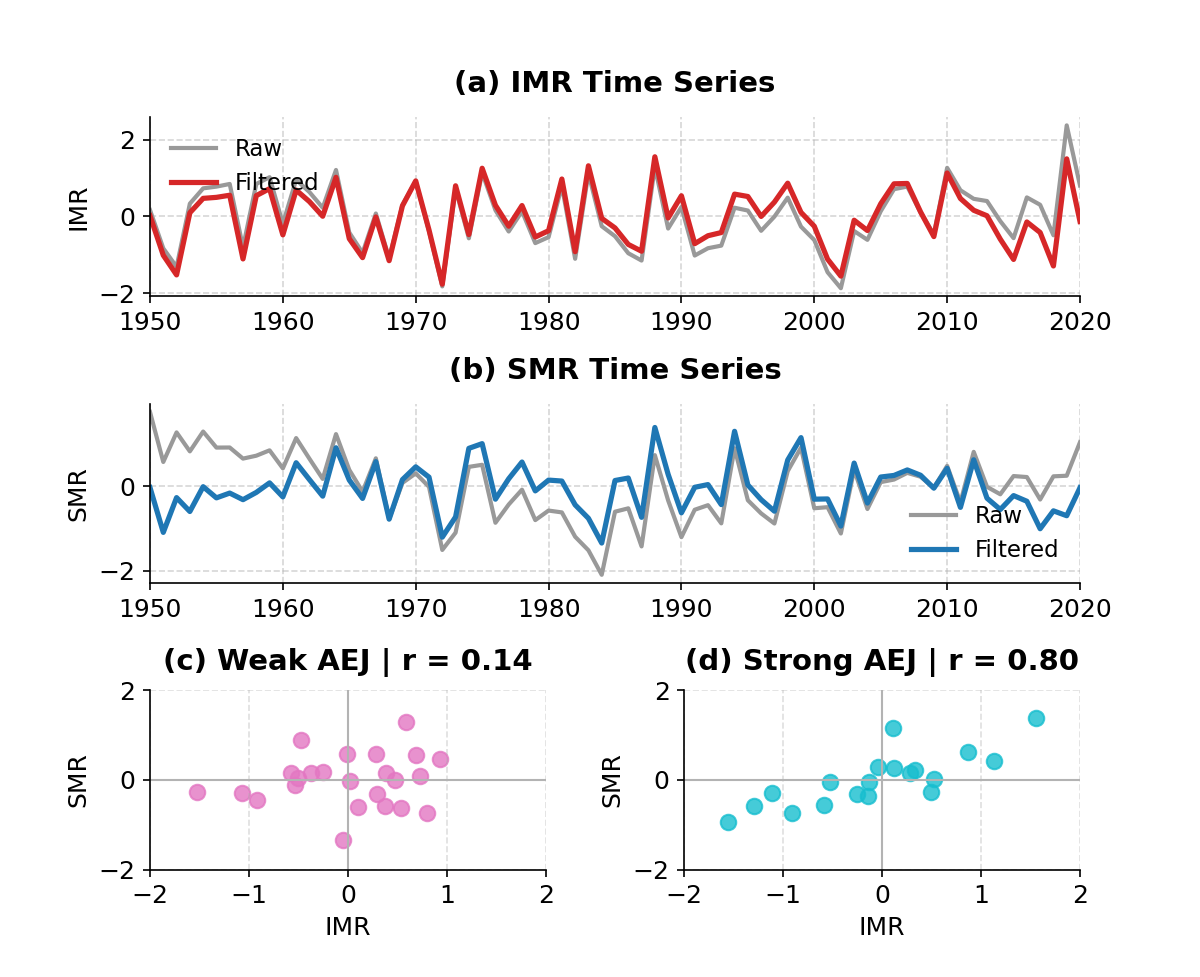
Westward Propagating Events
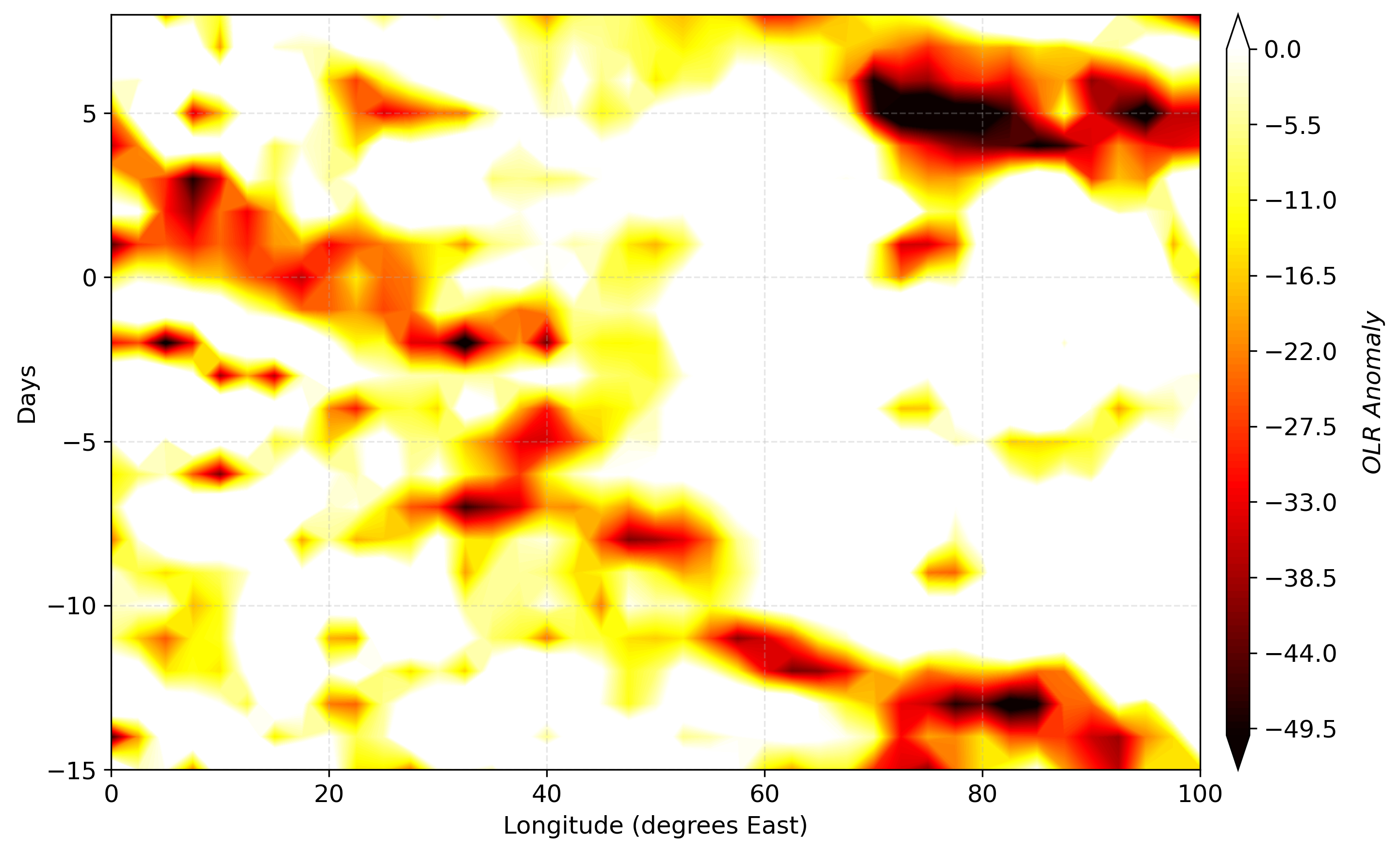
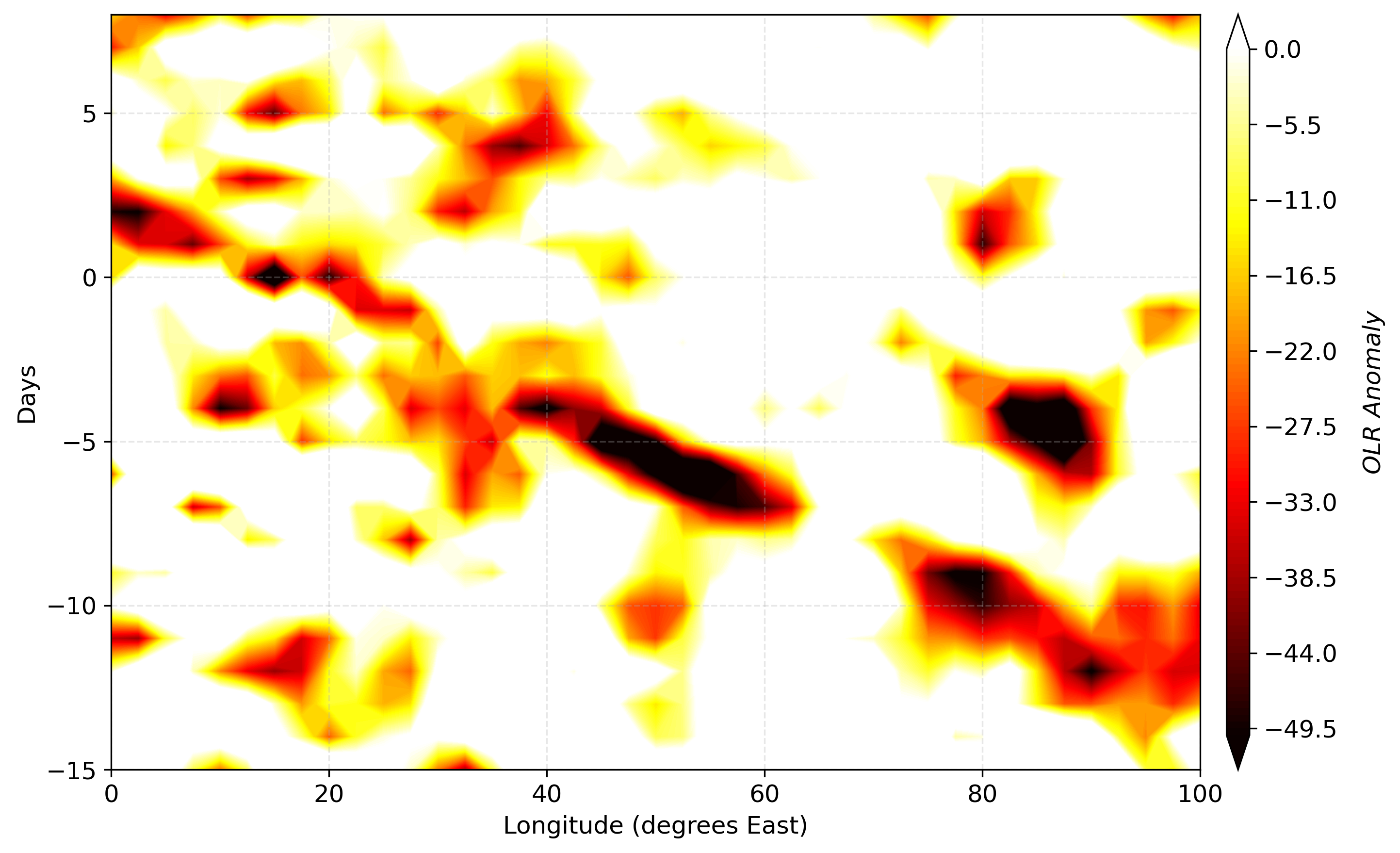
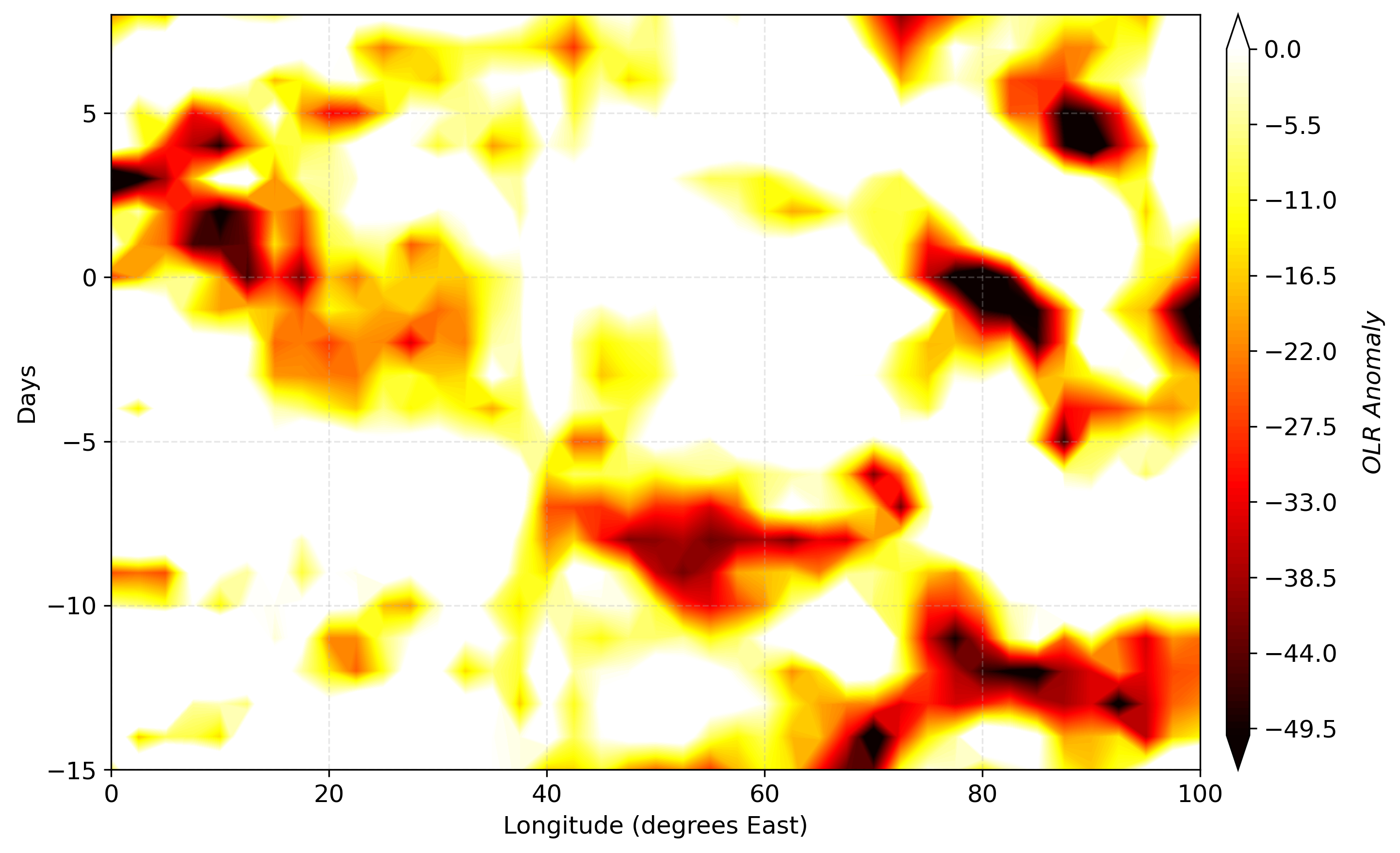
- A prominent westward-propagating mode is observed, originating over the Indian region and moving toward the Sahel. Negative OLR anomalies in the Hovmöller plot clearly trace this system, which takes approximately 10–15 days to reach the Sahel from India. The African Easterly Jet, which plays a key role in the co-variability between Indian Monsoon Rainfall (IMR) and Sahelian Monsoon Rainfall (SMR), facilitates the efficient propagation of these intraseasonal systems across the continent.
References
- Bordoloi, Abhishek, Arindam Chakraborty, and Ravi Shankar Nanjundiah. "Enhanced covariability of Indian and Sahelian summer monsoons in recent decades." Environmental Research Communications (2025). Link